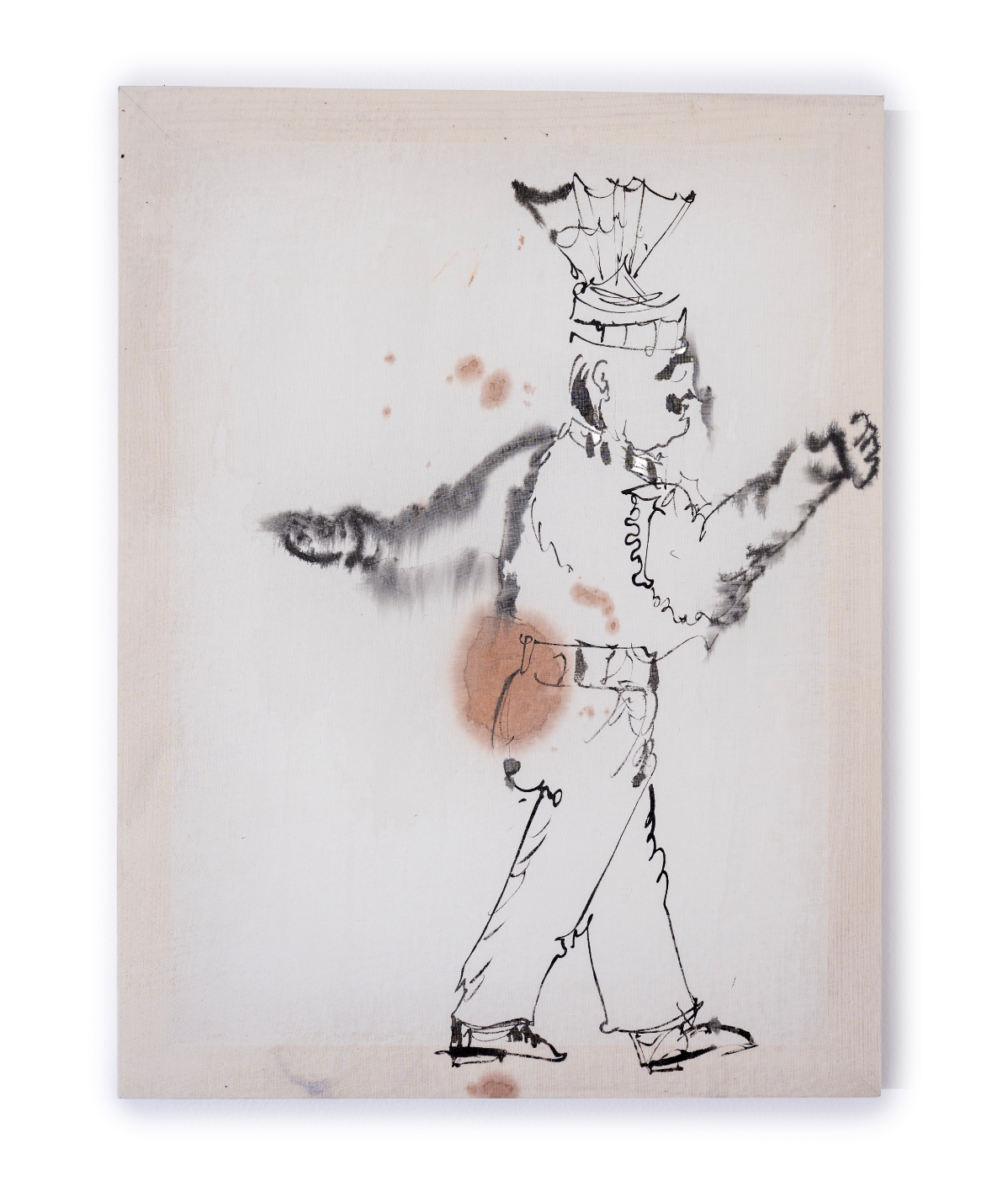
Footnotes
Booth D211, Sargent’s Daughters, Art Basel Qatar | February 3-7, 2026
“Footnotes draws on Ahmed’s ongoing engagement with the Wagah–Attari border ceremony, a highly theatrical military pageant enacted daily at the border of India and Pakistan. In this latest body of work, Ahmed focuses on the soldiers who perform at the border, as well as military marching musicians—drummers, brass players, and band members who perform at national parades, ceremonies, state events. Their uniforms and synchronized movements mimic those of soldiers, yet they remain marginal, even as they are fundamental to these nationalist displays. Populating Ahmed’s site-specific installation, the soldiers and musicians inhabit a charged landscape where political, geographic, and theatrical boundaries converge and collapse. Here, the border is not a fixed line but a breathing, shifting entity, inviting viewers to engage, cross, and recross the margins of history, humor, and memory.
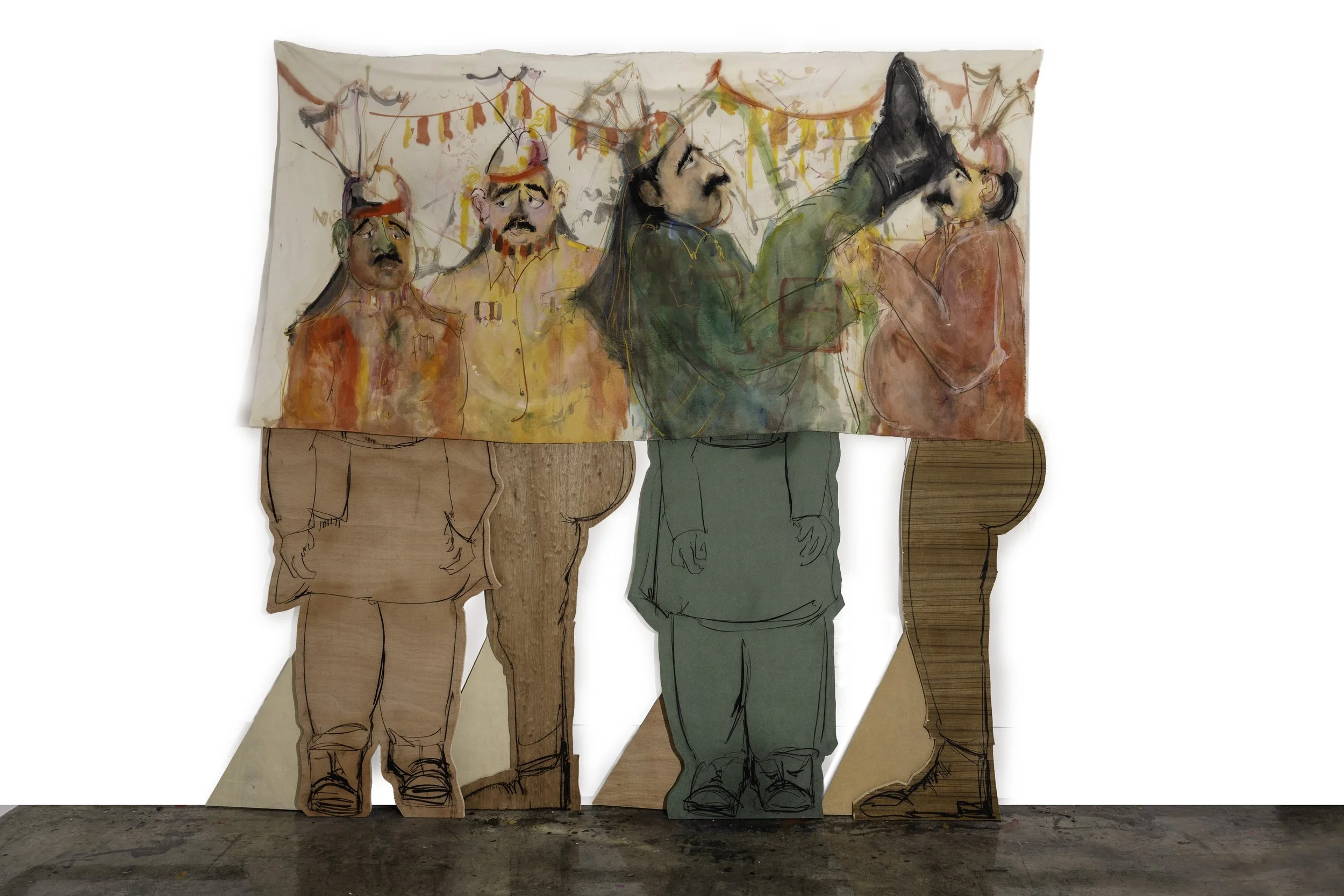
Footnotes coalesces Ahmed’s multidisciplinary practices of painting, drawing, and sculpture. The heart of the work is a layered series of suspended paintings on muslin, hung at eye level, inviting viewers to walk around and between them, to see both sides, and experience the act of “crossing” without restriction. This is in dialogue with plywood cut-out figures marked with gestural charcoal drawings, their solid bodies echoing and extending the figures on the muslin. Across these varied media, Ahmed’s playful linework captures the musicians in their elaborate uniforms and heightens their gestures. Through absurdity and individuality, she creates a counternarrative to the grand pronouncements of the border ceremony.
Ahmed’s muslin paintings are porous yet defined, delicate yet monumental, mimicking the contradiction of borders as both separators and meeting points. Their permeability allows paint to seep through, destabilizing drawn lines and blurring boundaries, while muslin’s historical resonance — from colonial trade routes to women’s labor — holds the weight of geopolitical histories. The paintings move subtly with the air, their surfaces swelling and contracting as if breathing, amplifying the movements of the audience and echoing the haunting presence of history as a specter that hangs in the room.
Plywood cutouts of fragmented figures, propped up like stage sets, anchor the installation and materialize Ahmed’s mark-making in three-dimensional space, while extending the painted compositions and existing in proximity to the viewer’s bodies. They create a topography that is simultaneously grounded and atmospheric, evoking the contested landscape of the subcontinent while never resolving into a singular narrative.
Fragmentation is central to Ahmed’s practice: each distortion, smear, or displacement undermines authority and linearity. The installation itself operates as a theater, and fictional border zone where the audience becomes both performer and spectator. The stage is a landscape of broken contours, where political lines are reframed as choreographic pathways. In Footnotes, repetition and distortion transform histories of Partition, theatrical ritual, gendered labor, and militarized choreography into an absurd dance.”
This body of work was developed during a residency at The Arts Intensive Study Program at Fire Station, Doha, Qatar.
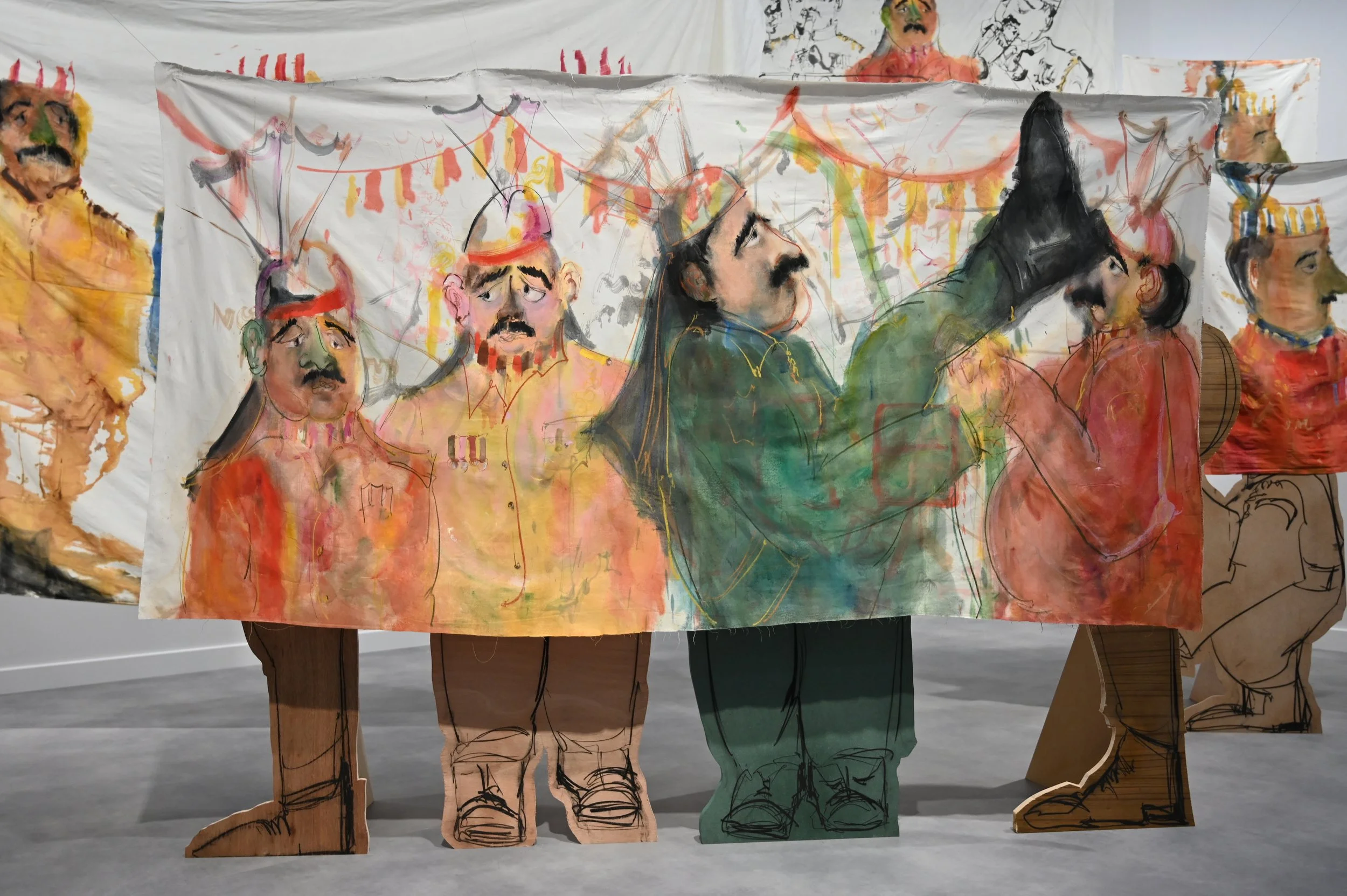
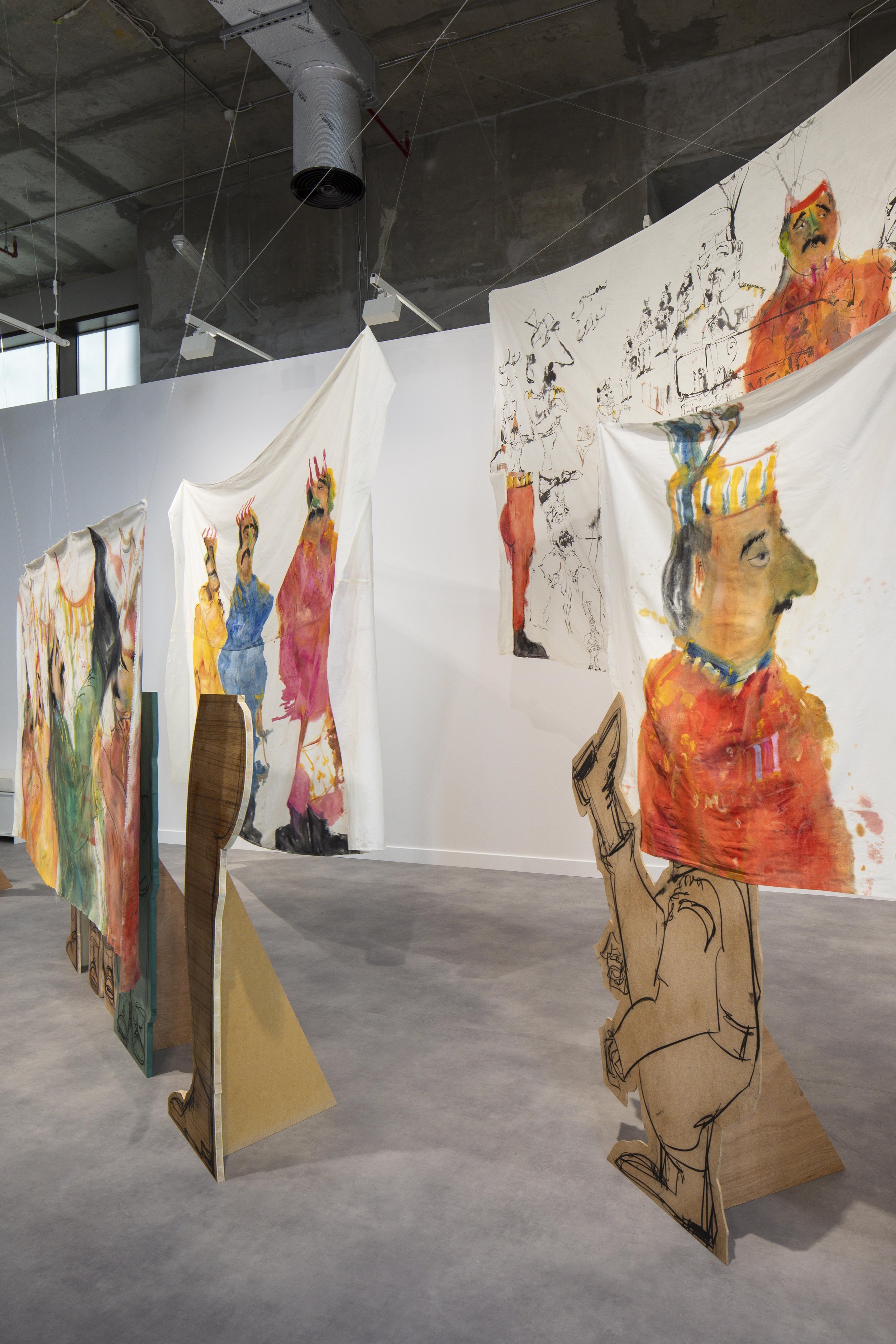
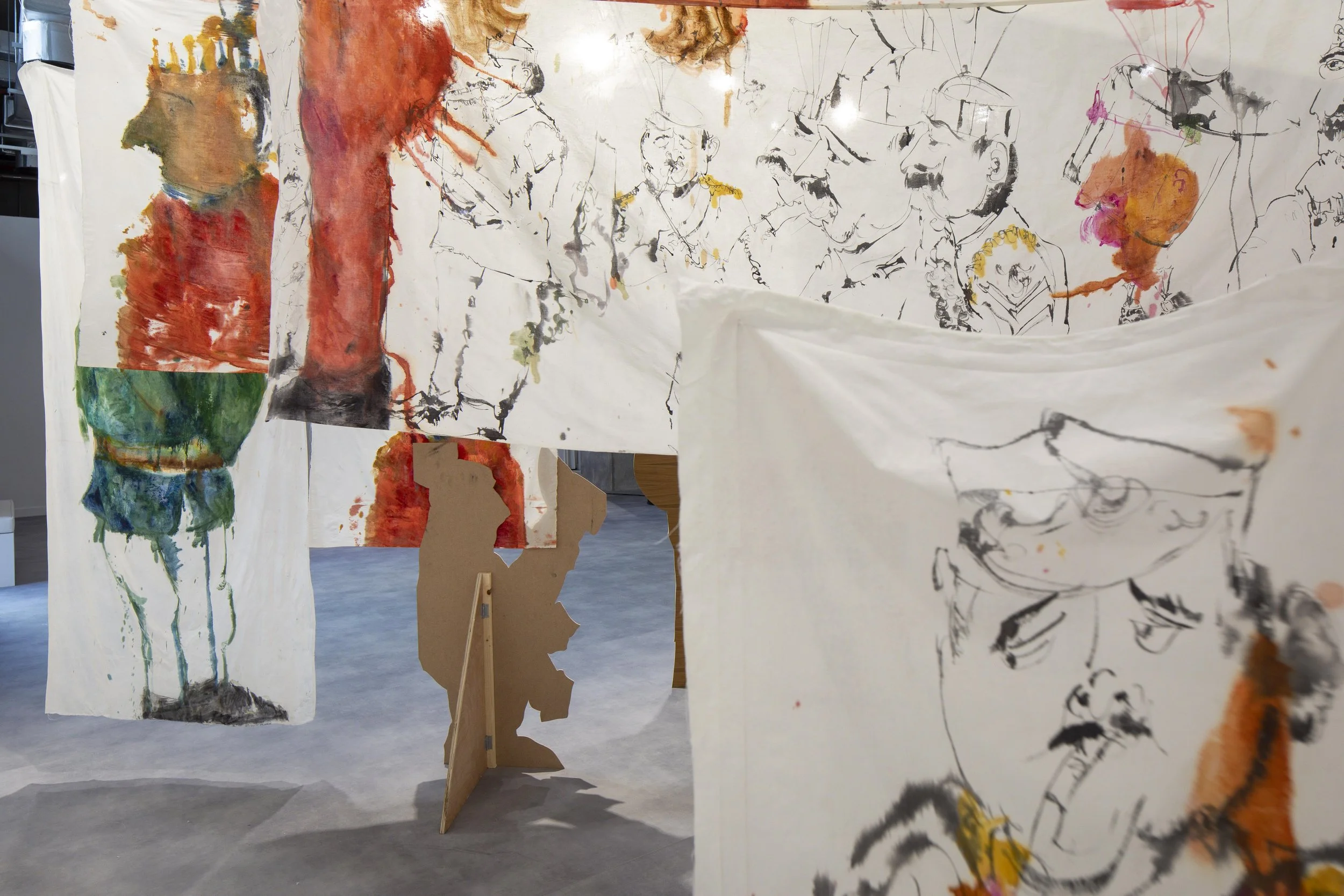
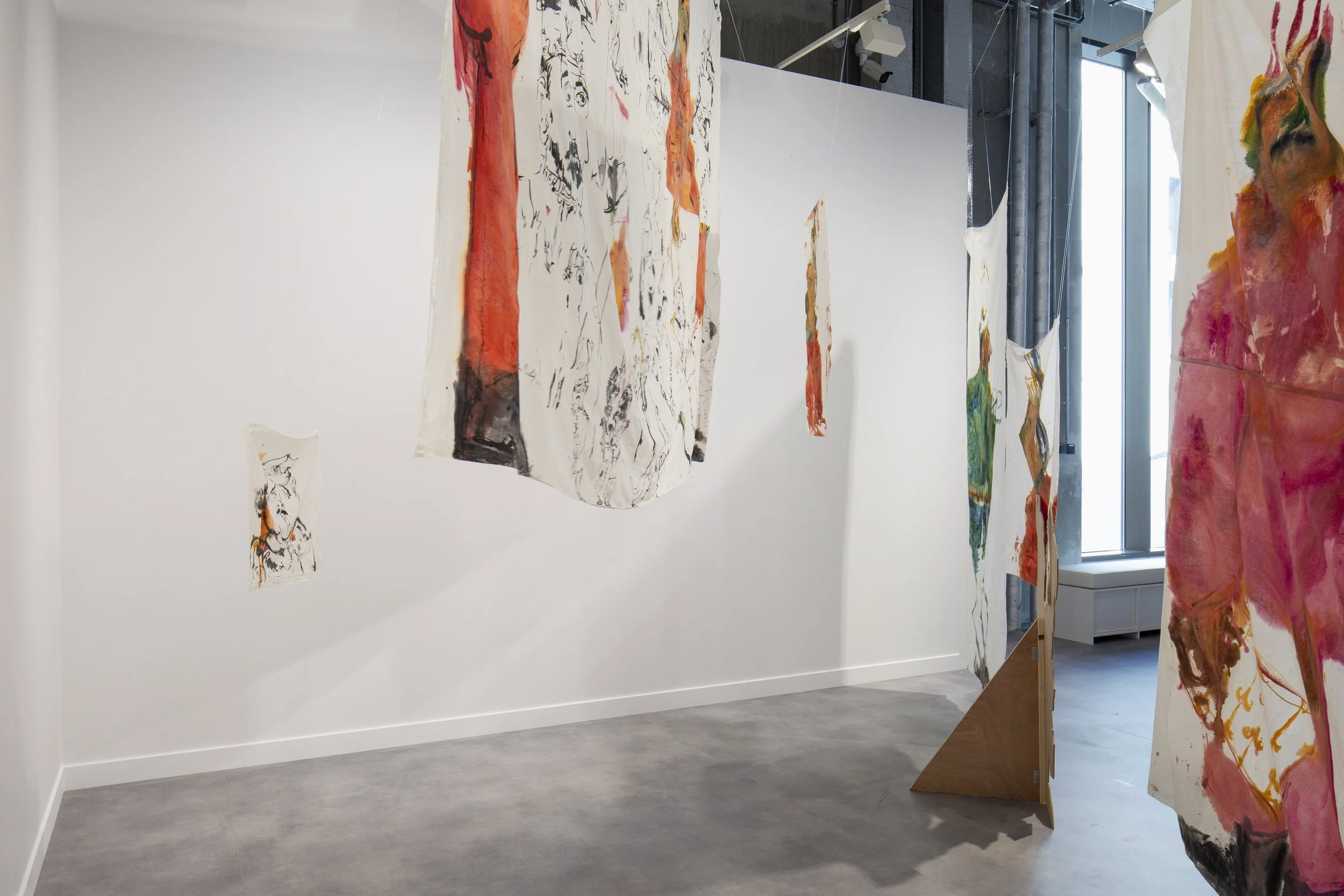
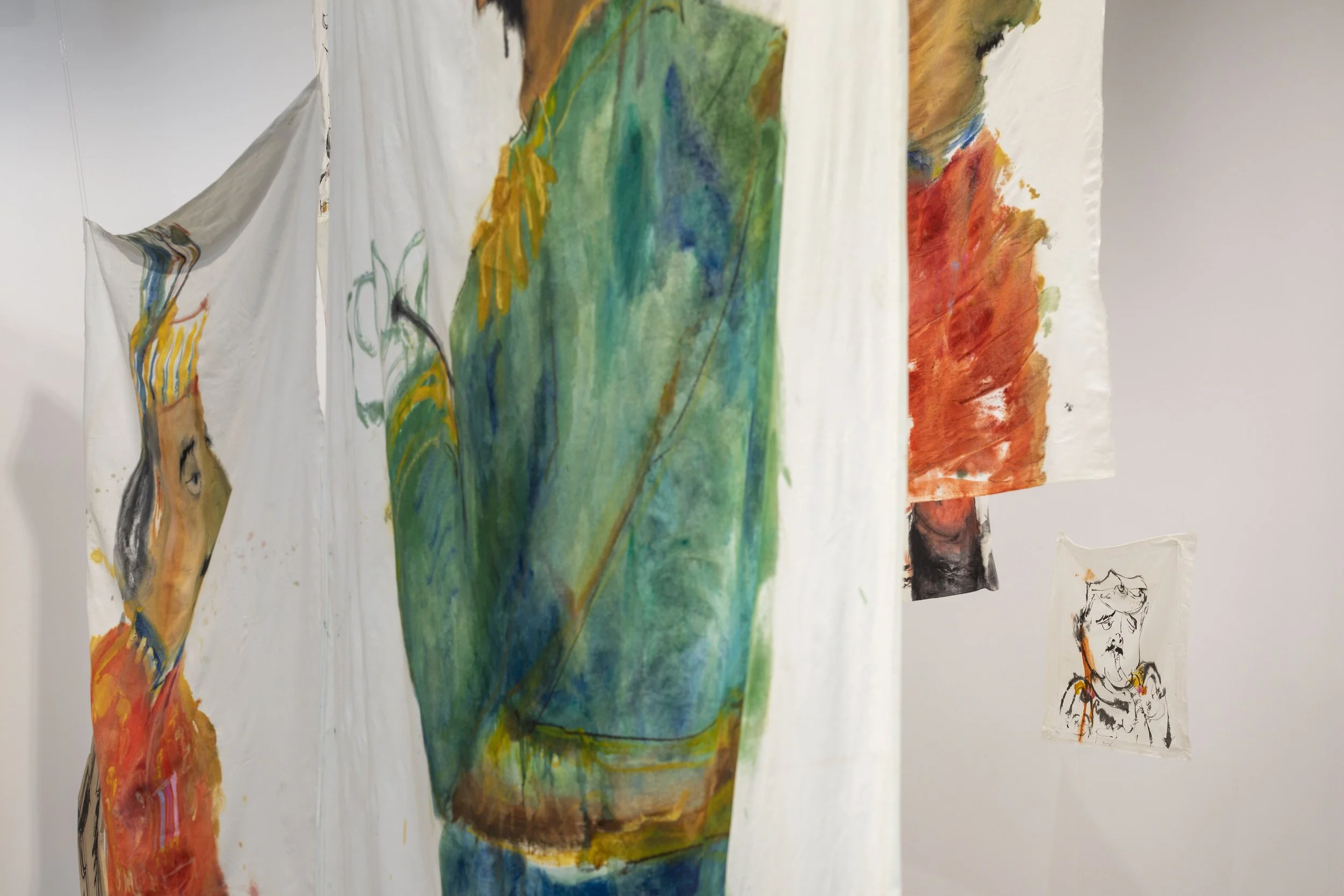
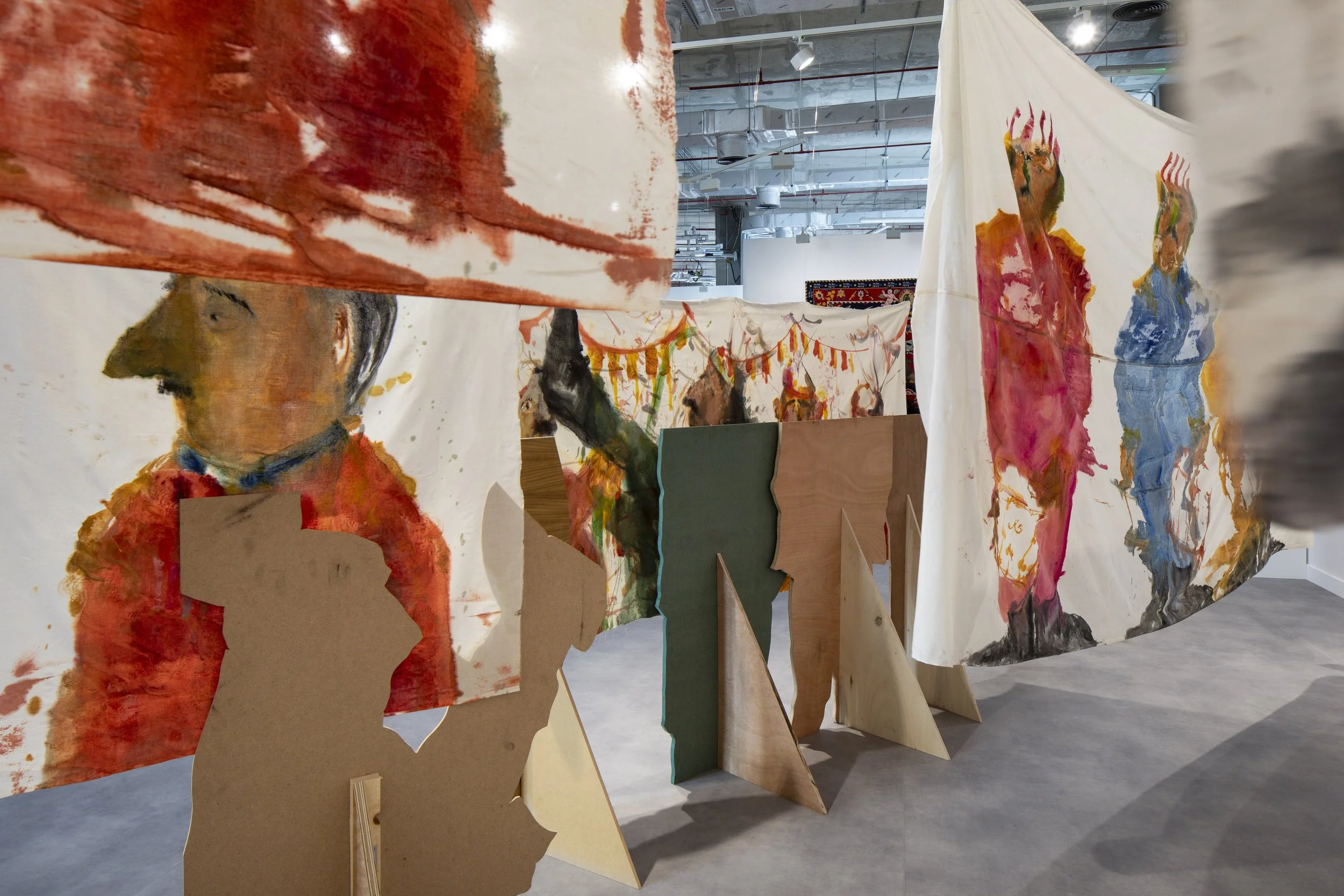
Drumroll, 2026, oil and charcoal on muslin; charcoal on wood, 96 x 108 x 20 in.
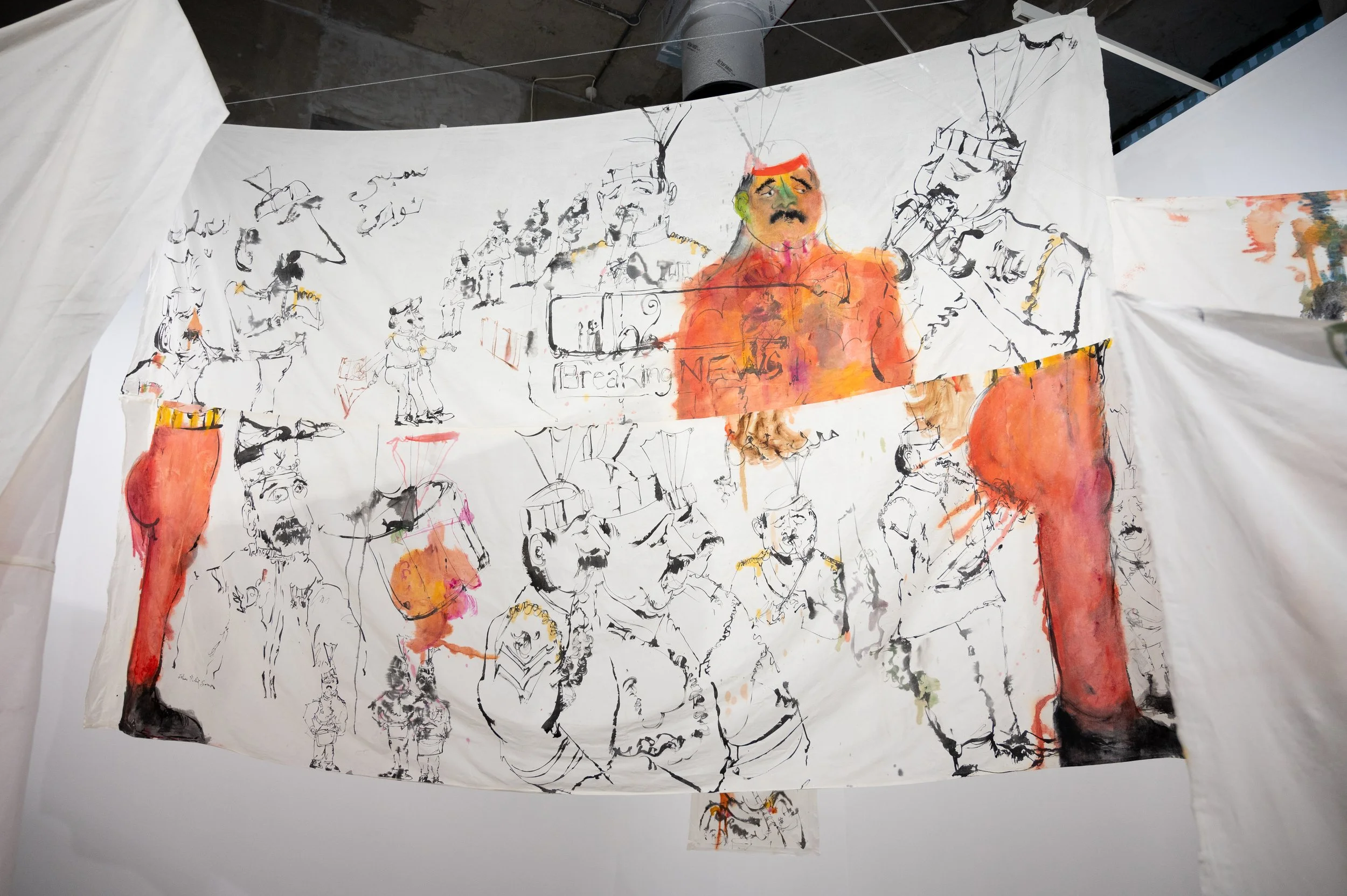
A note within a note within a nose, 2026, oil, ink, and charcoal on muslin, 80 × 125 in.
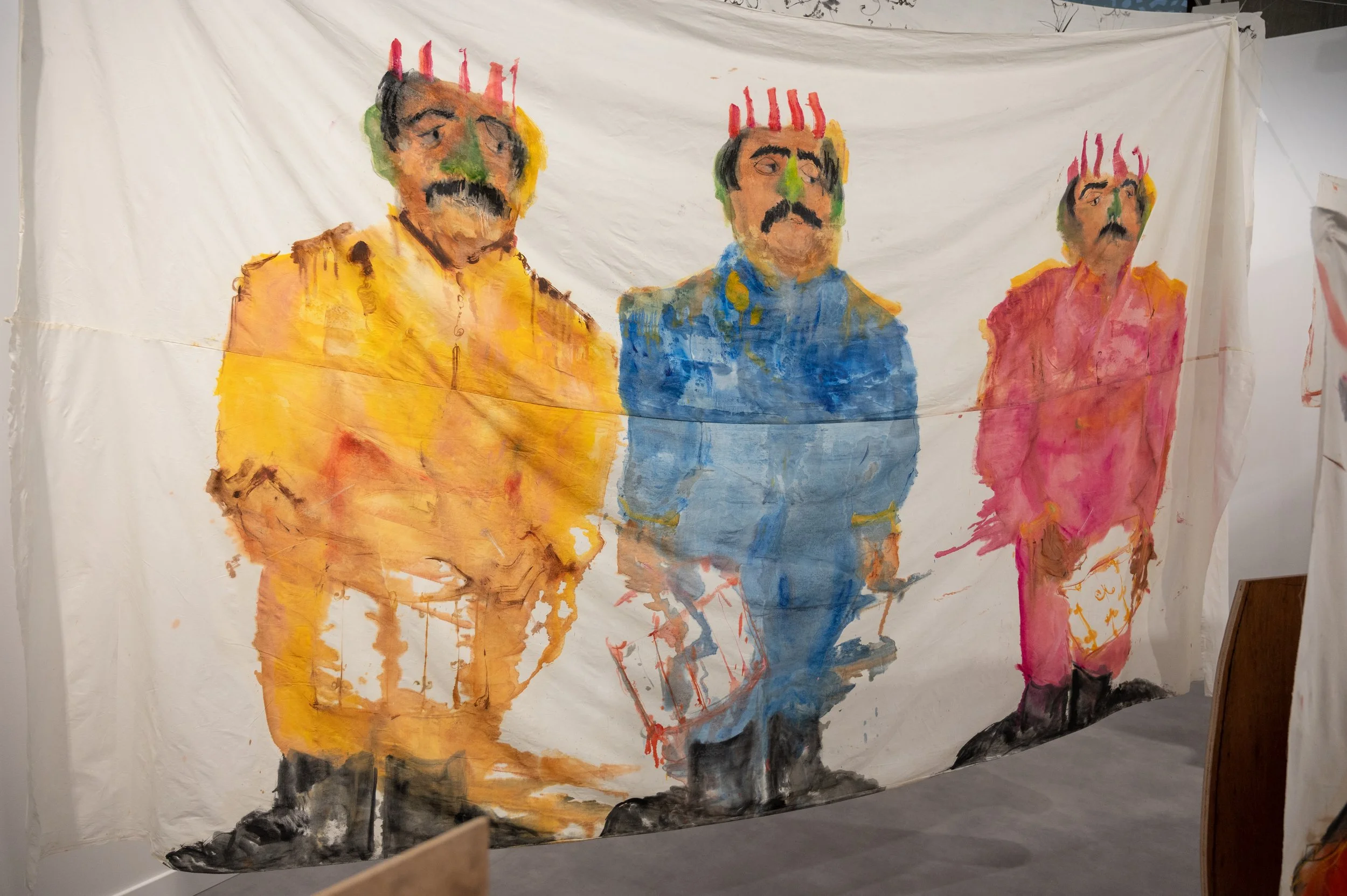
Three Stooges, 2025, oil and charcoal on muslin, 80 × 142.5 in.
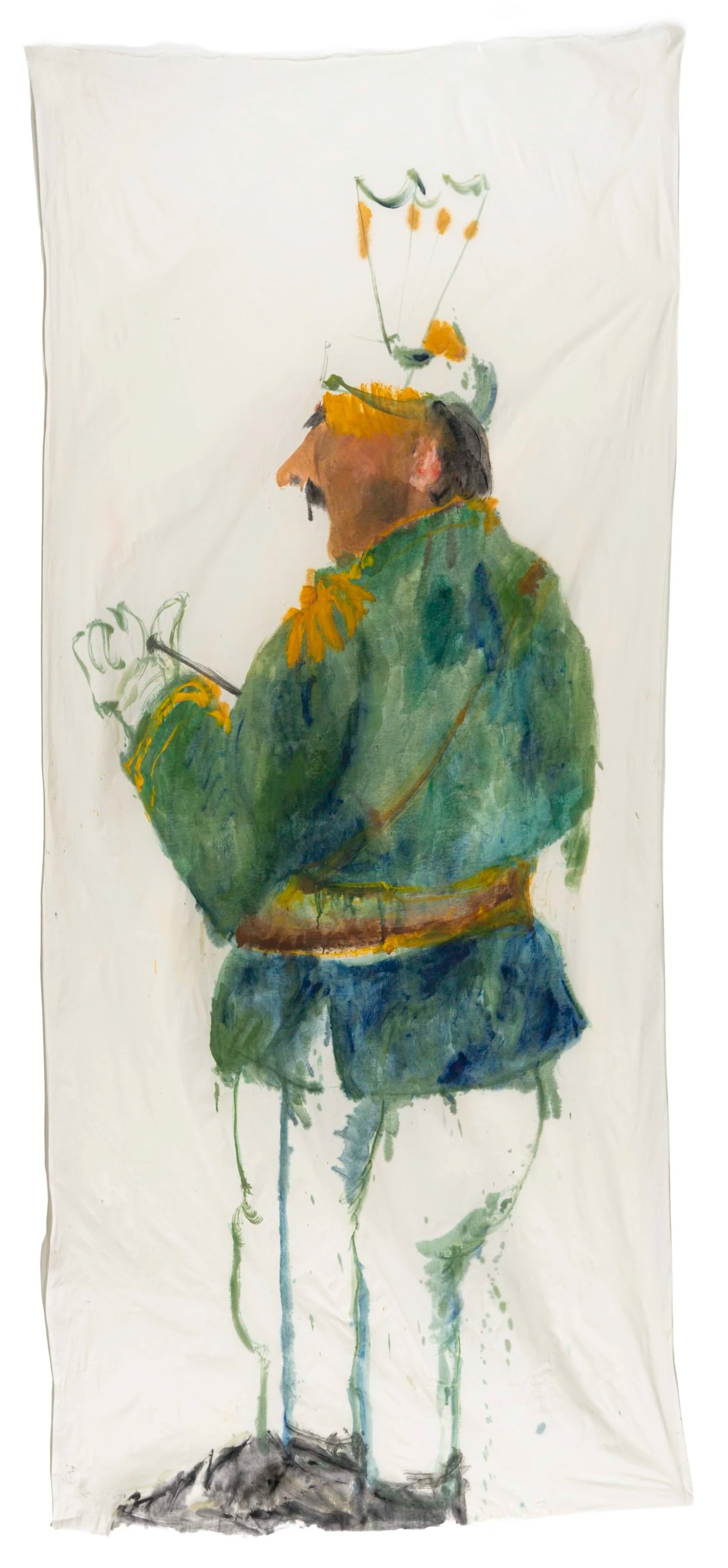
Conductor, 2025, oil and charcoal on muslin, 96 × 42.5 in.
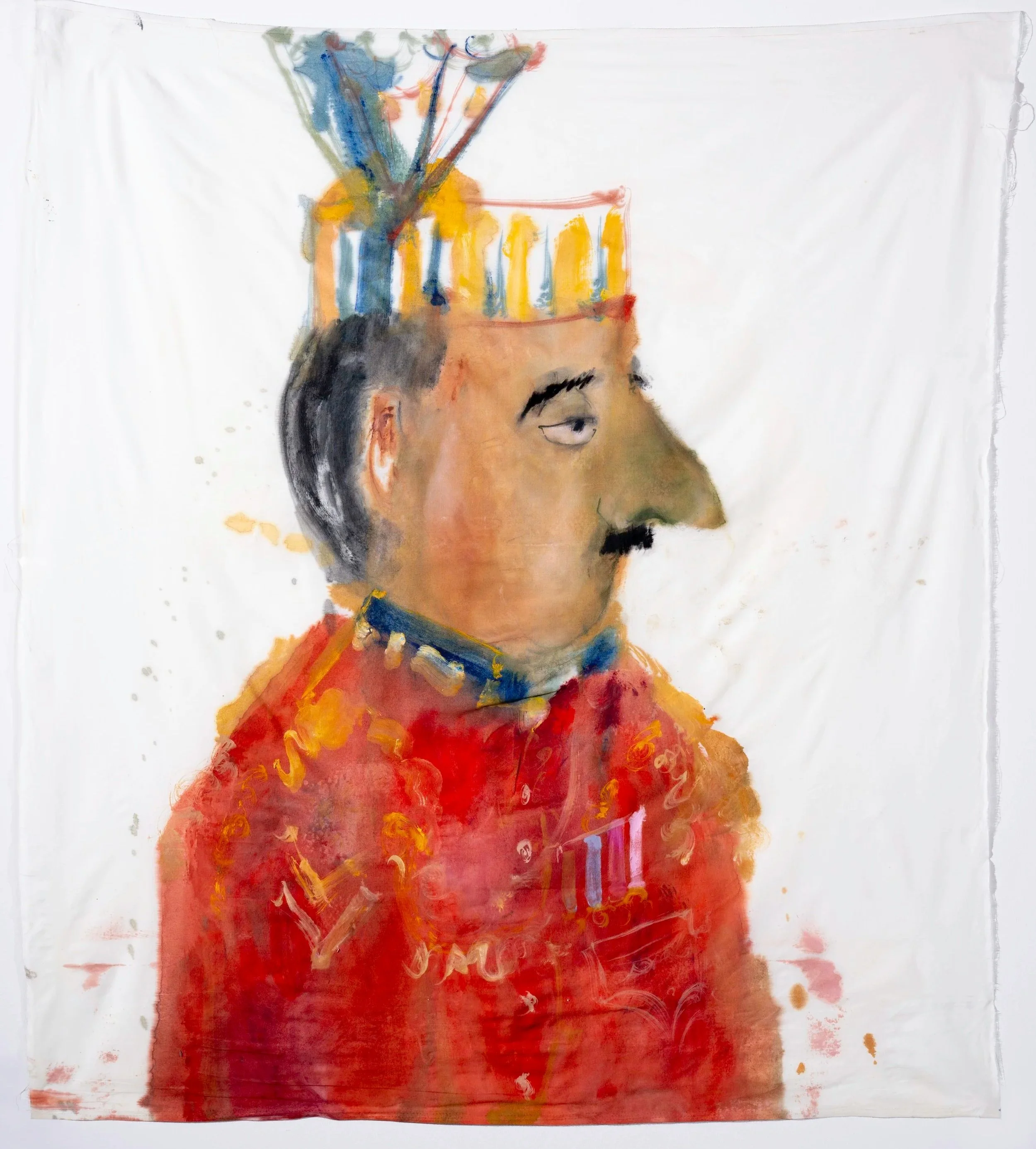
Barely standing, 2025, oil and charcoal on muslin, 42 × 37.5 in.
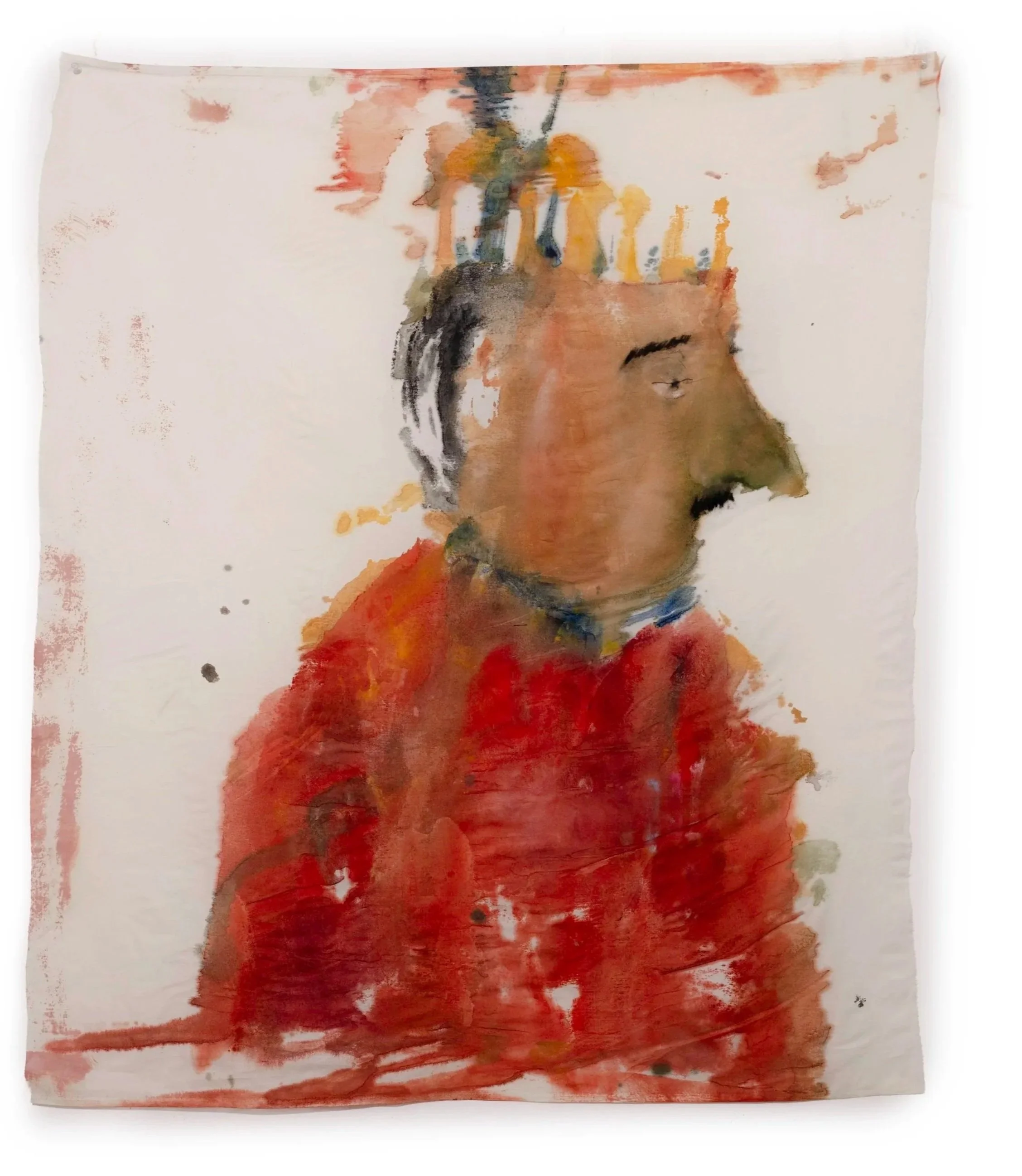
Barely standing, almost gone, 2025, oil and charcoal on muslin, 42 × 35.5 in.
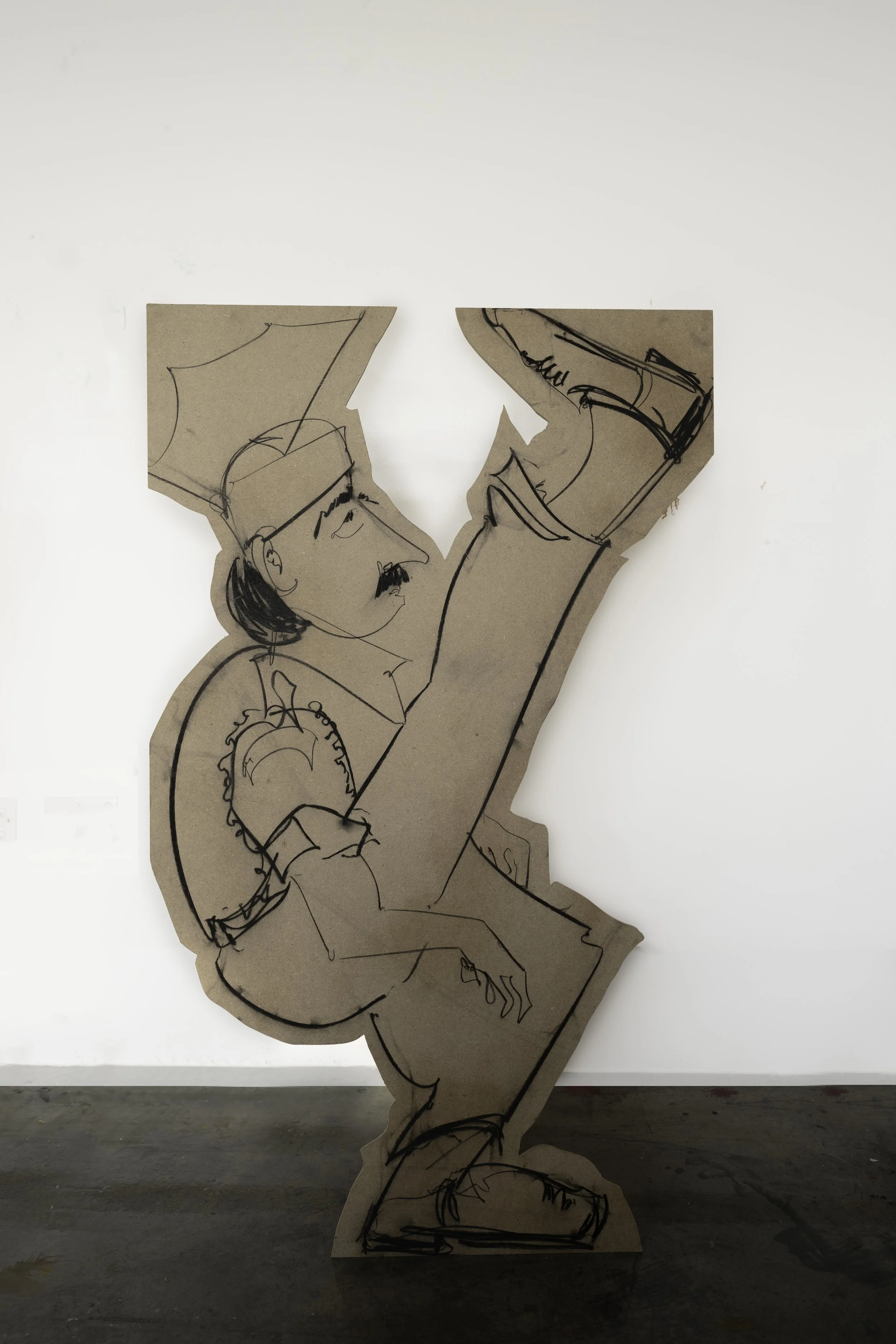
Askari, 2026, charcoal on wood, 48 × 29 × 18 in.
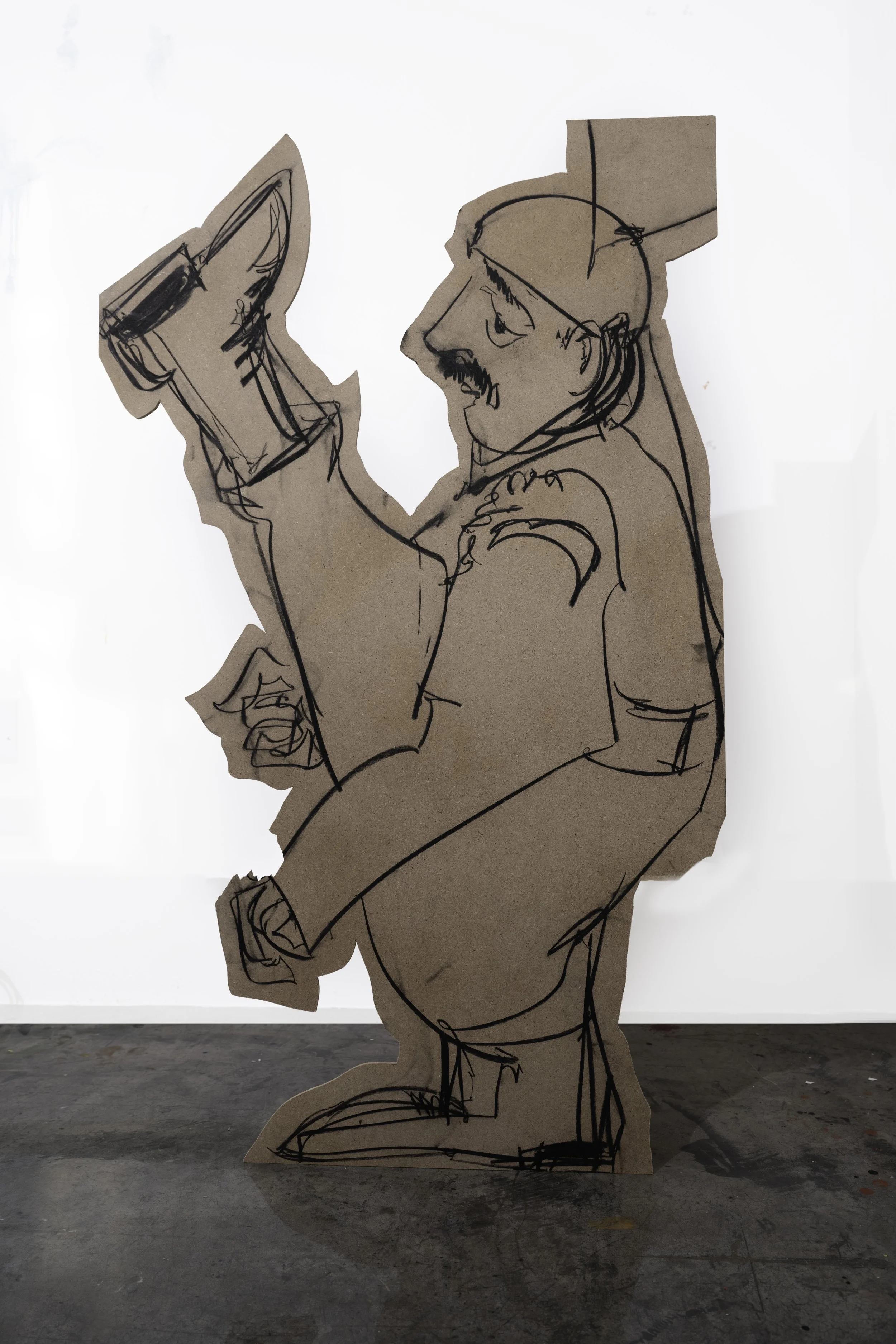
Lamaan, 2026, charcoal on wood, 48 × 29.5 × 21 in.
Band practice, 2026, oil and ink on muslin, 12 × 14.5 in.
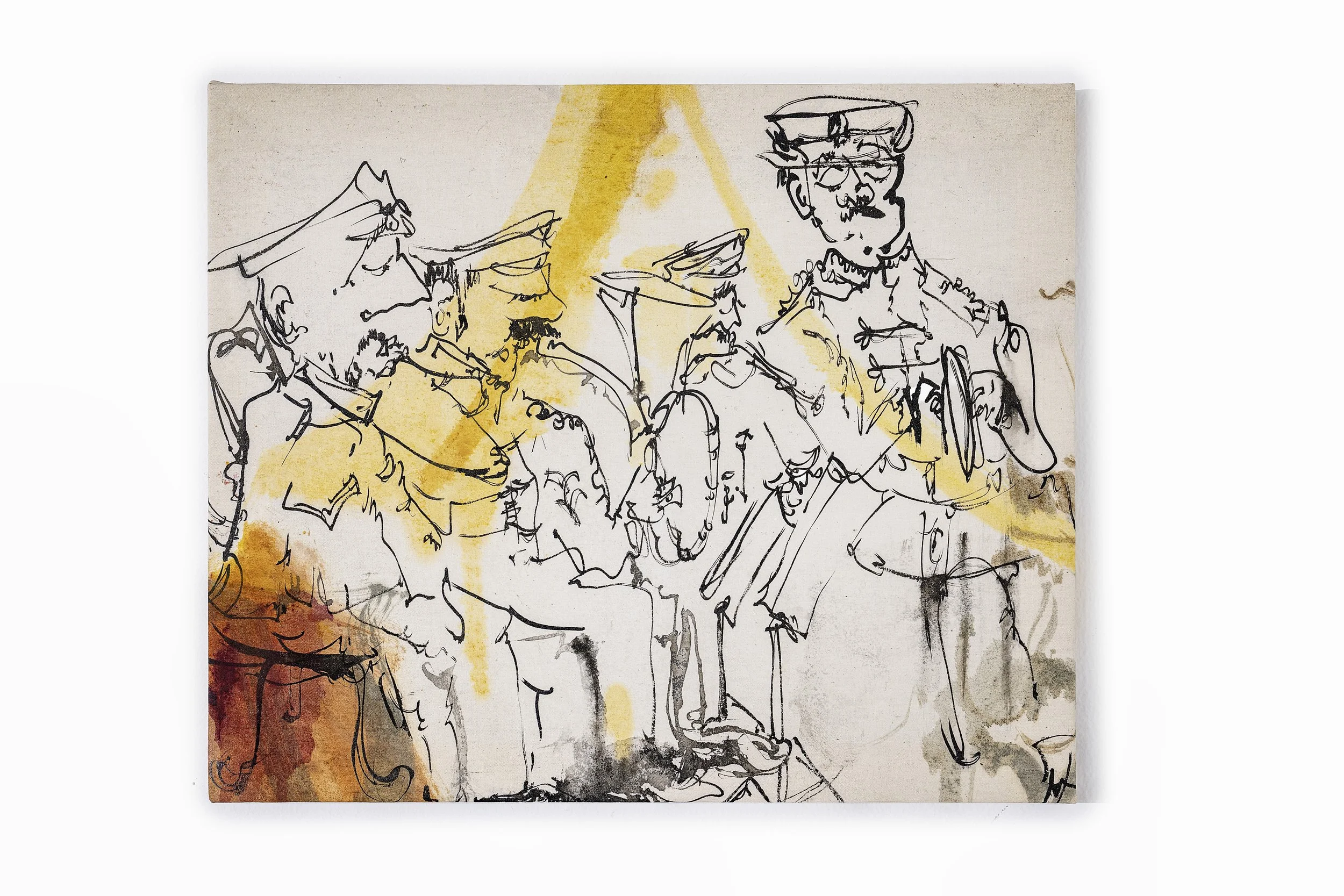
Tone deaf, 2026, oil and ink on muslin, 19.5 x 17.5 in.
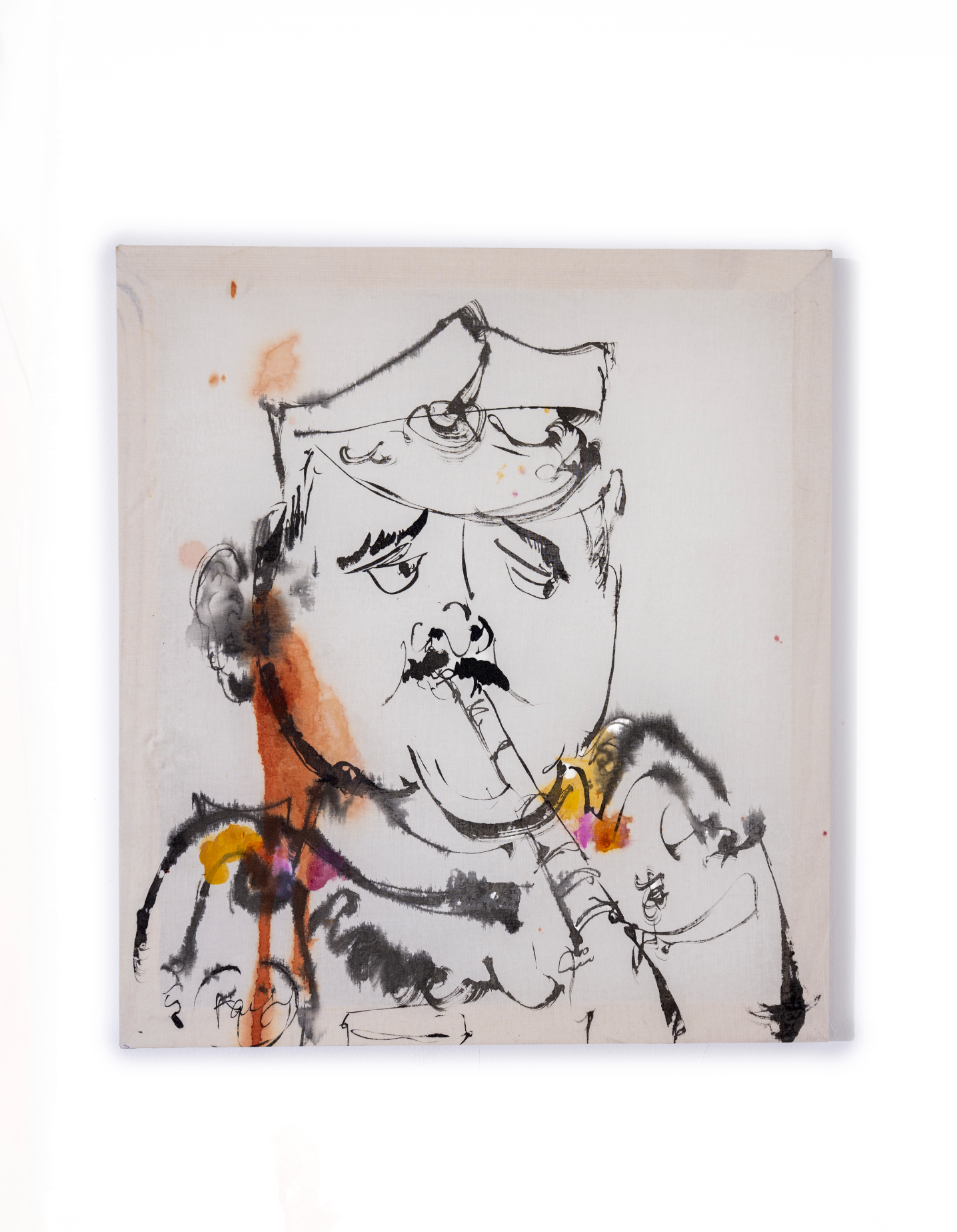
“Rare performance!”, 2026, oil and ink on muslin, 18 × 13 in.
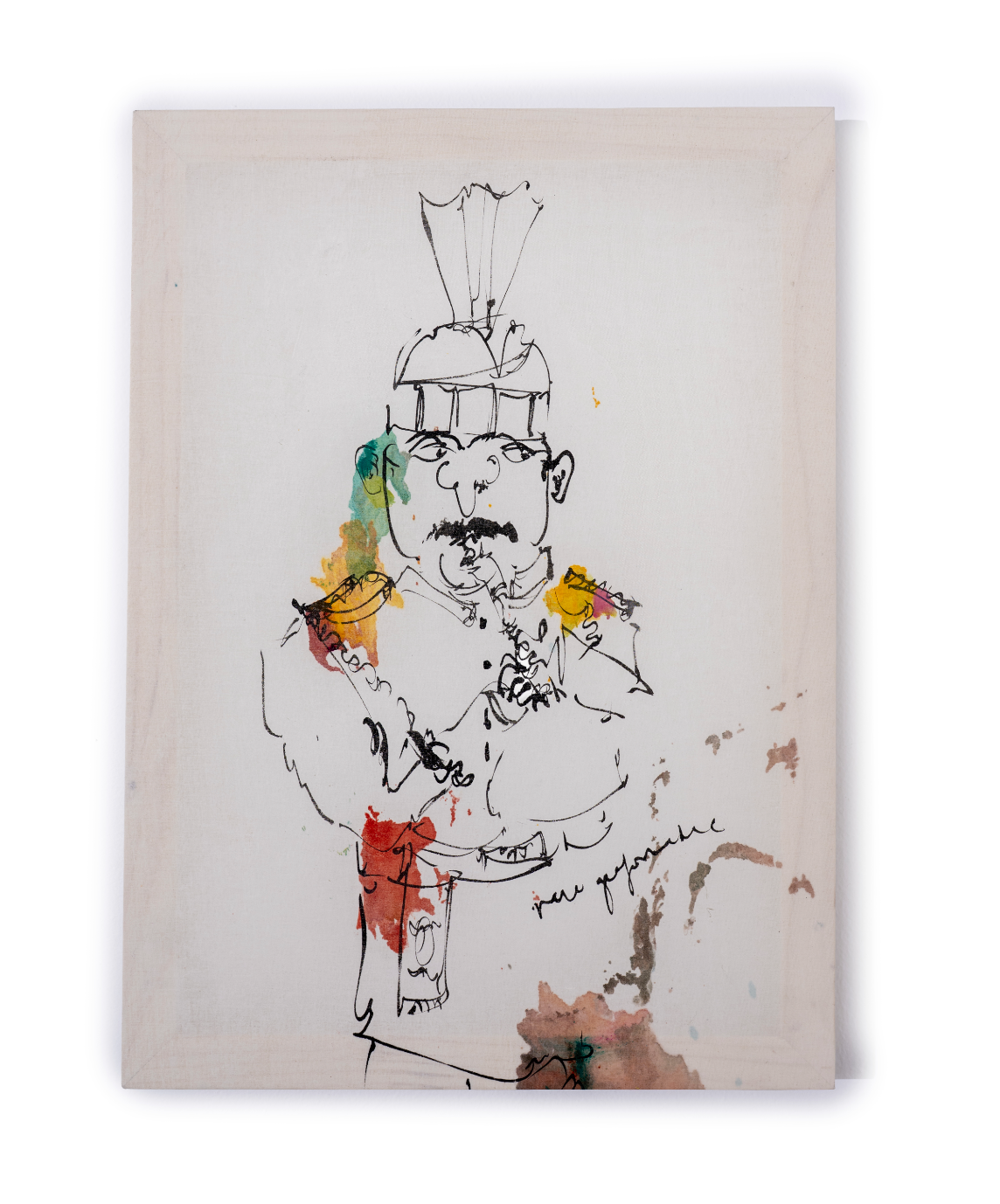
A shot in the dark, 2026, oil and ink on muslin, 19 × 15 in.
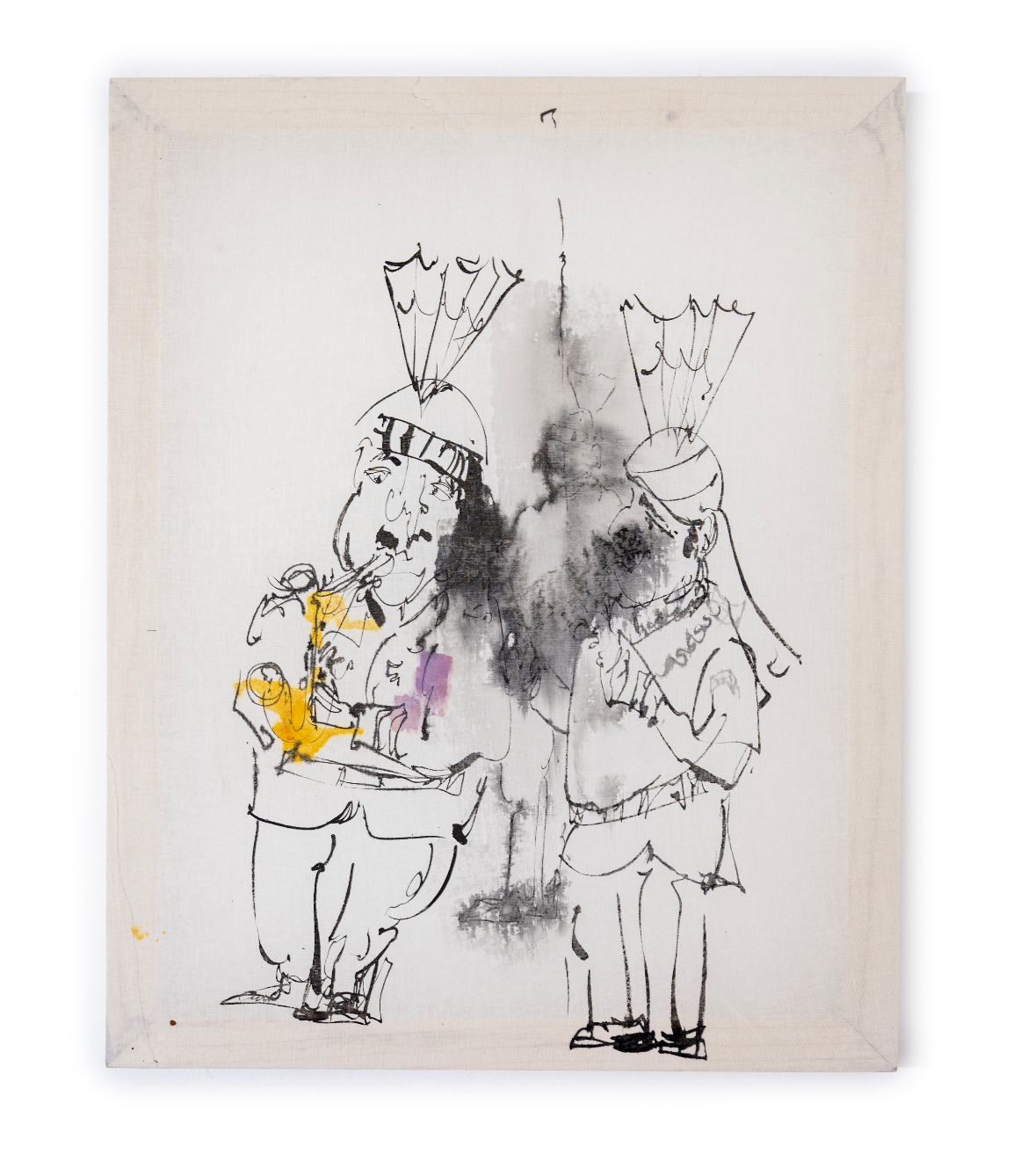
Can’t get a grip, 2026, oil and ink on muslin, 20 × 15 in.
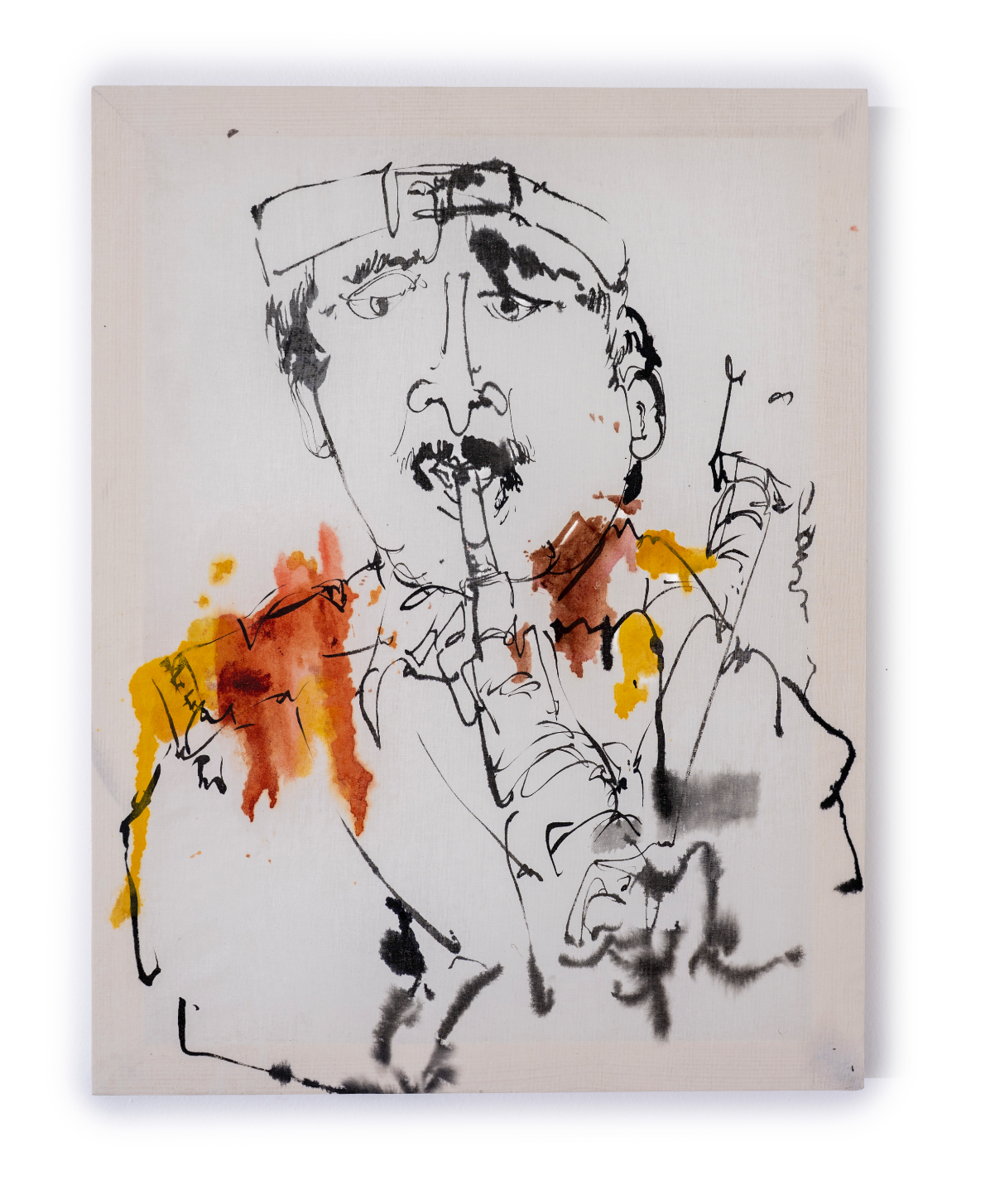
Offbeat, 2026, oil and ink on muslin, 18.5 × 14 in.