Portals
Museum of Contemporary Art Arlington, Virginia | June 13–September 7, 2025
Curated by Donna Honarpisheh featuring Aiza Ahmed, Shyama Golden, Aryana Minai

“The exhibition Portals explores the psychic, material, and spiritual states of life at the threshold. A threshold evokes the liminal and the not yet as a space and experience that exists beyond the binary and calls upon us to think, imagine, and linger. The paintings, sculptures, and installations by Aryana Minai, Shyama Golden, and Aiza Ahmed approach the portal as both a physical point of passage—a doorway, gate, or architectural threshold—and a metaphysical or psychic opening into other realities. These portals are architectural and poetic, experiential and otherworldly. They evoke mystical transitions, spiritual encounters, and dream states that resist linear time and fixed identities. Each artist activates what Gaston Bachelard calls “poetic reverie,” an imaginative state wherein the dreamworld becomes a generative space of creative transformation and profound affective experience. Through varied material practices, Minai, Golden, and Ahmed articulate the portal as a site of passage and suspension that opens into unsettled histories, embodied memory, and reimagined futures." — Donna Honarpisheh
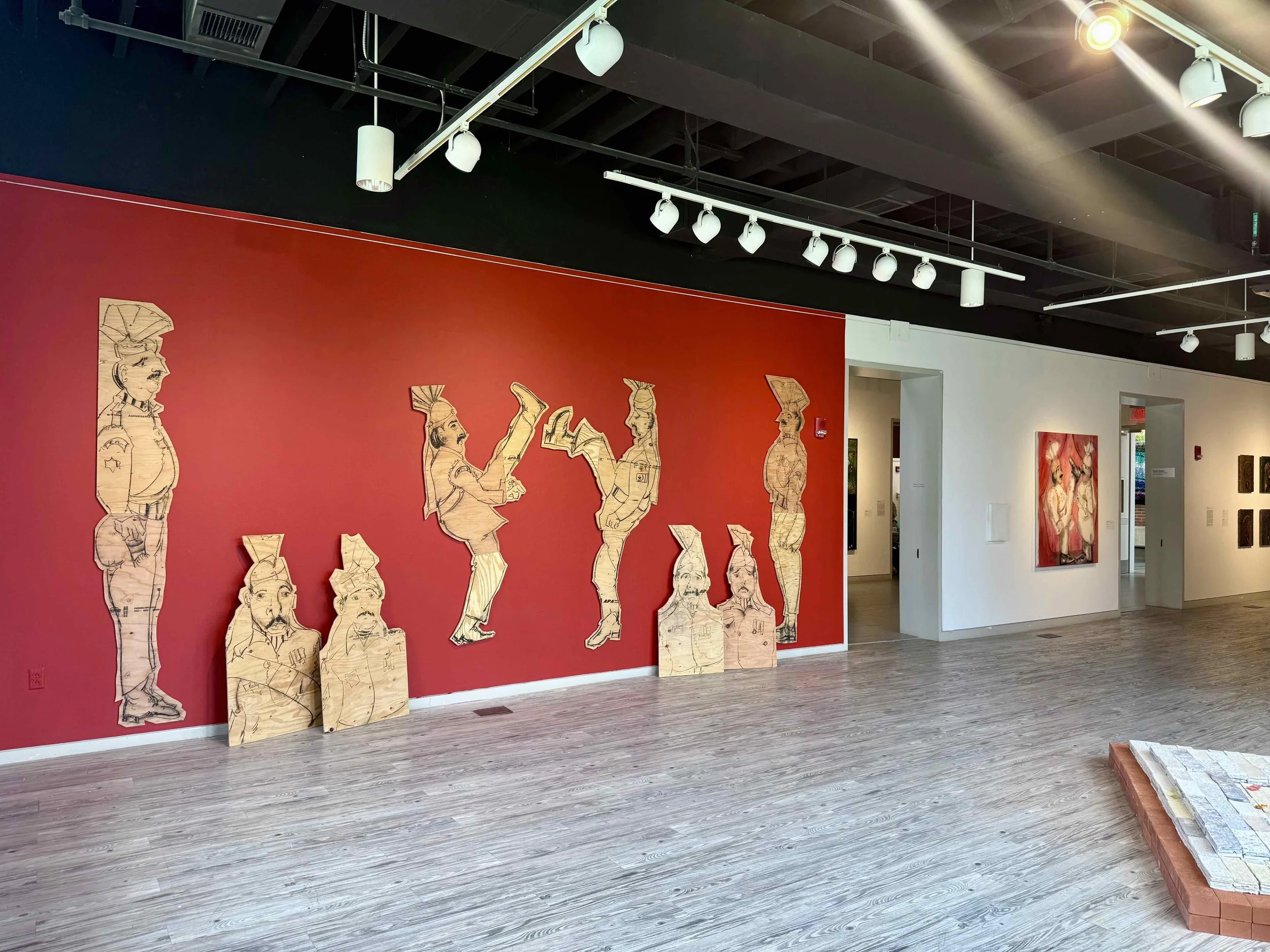
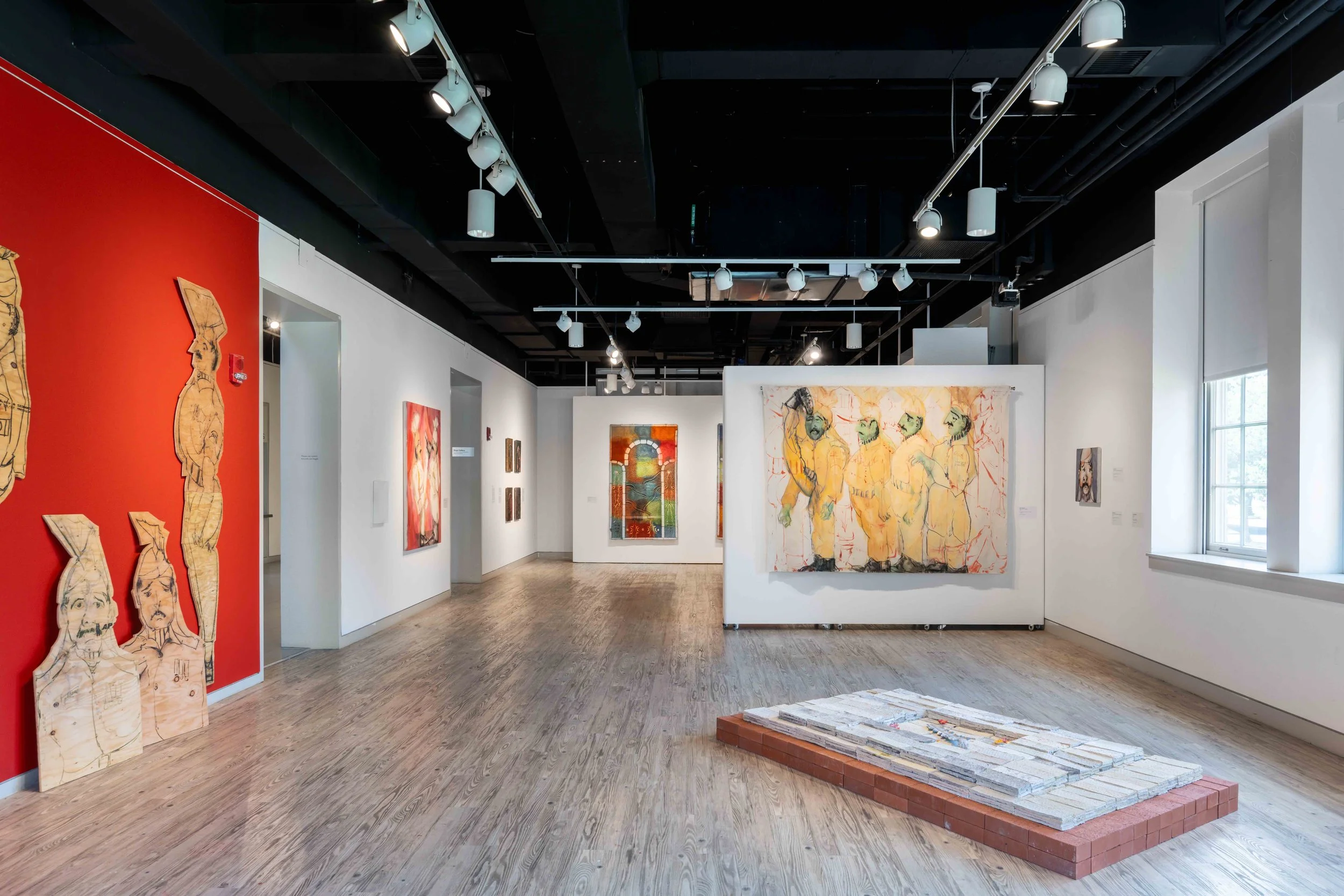
Aiza Ahmed’s work explores the portal as a re-staging of historical events and characters. Ahmed’s portals emerge as temporal and spatial ruptures in which history is approached through the gestural and active aspects of theater. Ahmed’s work creates a world in which national identity and its imposed boundaries are unraveled, revealing the concealed folds of history. Working at the intersection of material history and imagined futures, she engages in what Homi Bhabha calls the “Third Space,” a space of hybridity in which the aesthetic becomes a realm through which to redress historical violence. In this sense, fixed binaries such as self and other, nation and exile, past and present collapse, and cultural meaning are negotiated through disruption and translation.
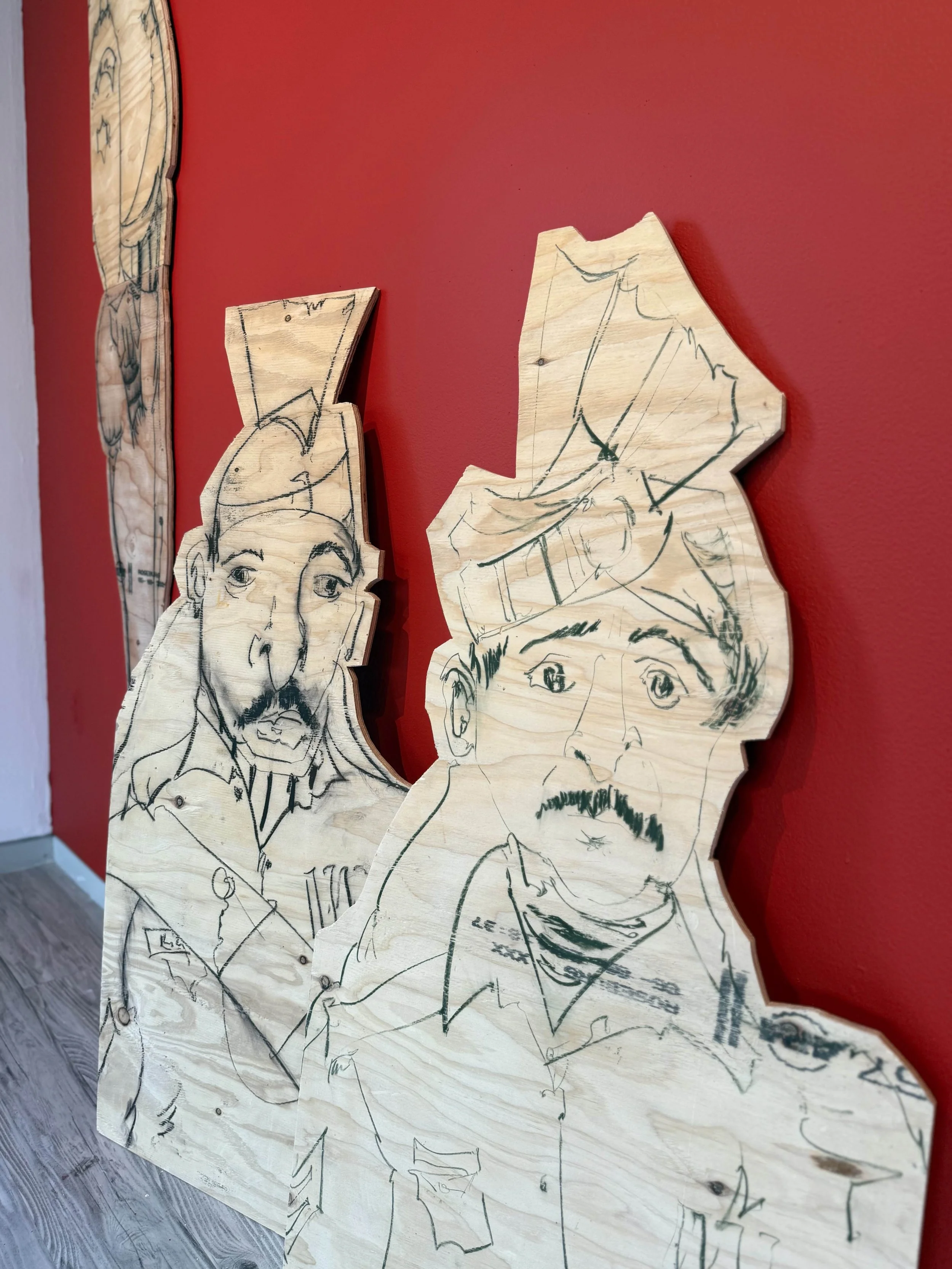
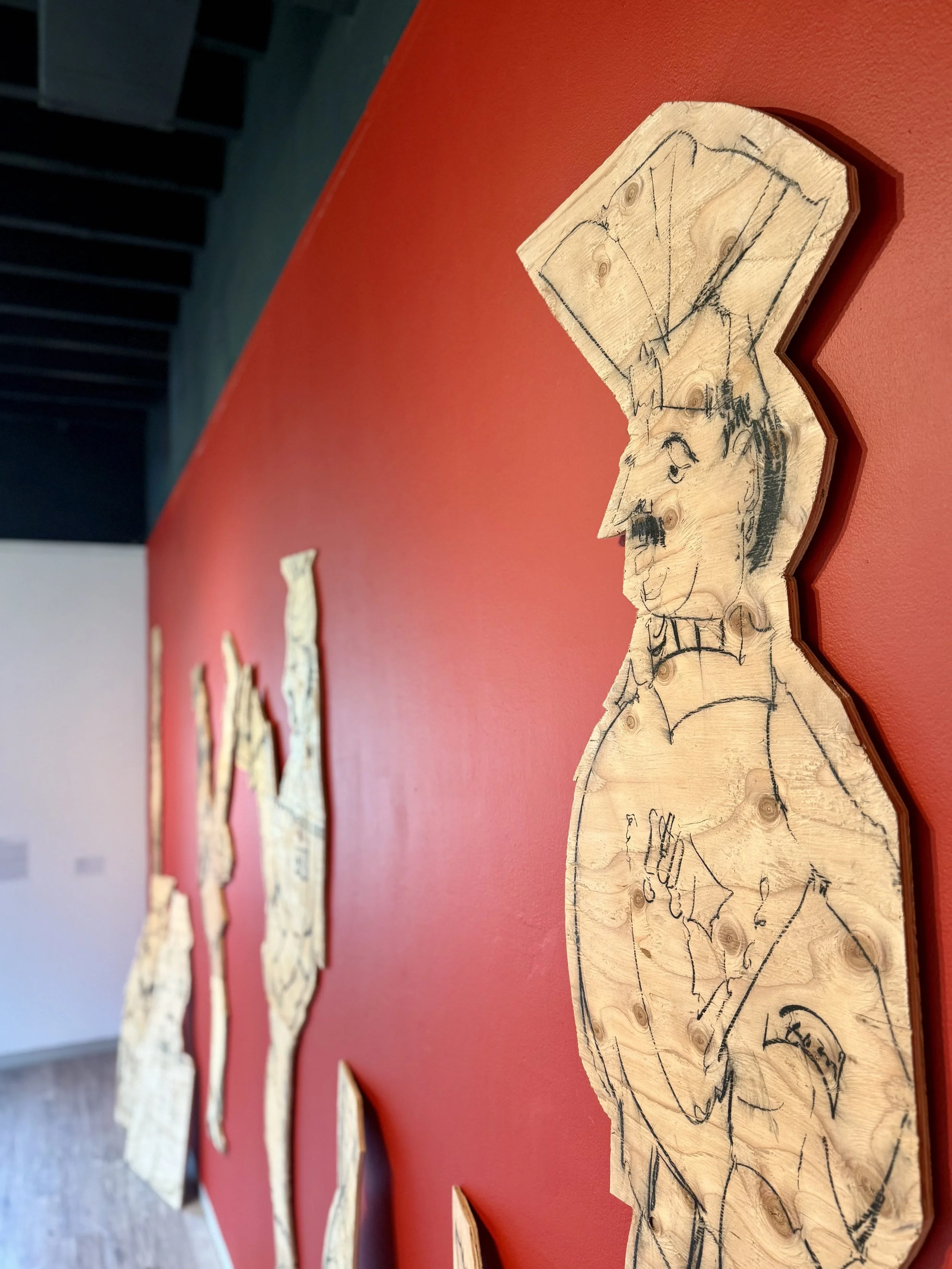
In her recent installation Staging Wagah (2024), Ahmed uses wood cutouts to restage the symbolic Wagah-Attari border ceremony, a performative ritual of nationalism and rivalry enacted daily since 1959 between India and Pakistan (paused briefly after escalating tensions in 2025). By abstracting and multiplying the image of marching soldiers, with legs raised in divergent, almost unruly directions, Ahmed dismantles the authority of the border as a fixed dividing line and disorients the viewer by creating uncertainty around who belongs on which side of the border. The play with scale and choreography verges on caricature, unsettling the dominance that these figures are intended to symbolize and destabilizing the binary logic of national identity. In doing so, Ahmed transforms the militarized border and its spectacle into a stage that can be re-worked and disrupted.’
Exhibition catalogue available here.
Staging Wagah, charcoal on hand-cut wood, 2024, 120 x 258 inches (approx. 10 x 21 feet), installation view
This sense of theatricality and layered time permeates her broader body of work. In paintings, especially those in muslin, a material with deep roots in the Indian subcontinent and a fraught colonial legacy, Ahmed reclaims the textile as a site of resistance and storytelling. Muslin becomes a portal in itself: once a luxury good extracted through colonial trade networks, it now returns as a medium through which diasporic memory and feminist critique are inscribed. Ahmed’s distortions of masculine figures are rendered in exaggerated scale, caricatured gestures, and destabilizing color palettes, undermining both colonial structures and contemporary patriarchal nationalisms. The figures are at once performative and unraveling, their authority undone by Ahmed’s wit and visual strategy. Ahmed’s work uses humor as a critical mode of reconfiguring the past, in order to approach the continued psychic effects of nationally-imposed patriarchal structures and historical violence. In this way, Ahmed’s depictions traverse multiple registers of time. The ghostly shadows in her work destabilize existing boundaries. In the work, color spills outside of the line, refusing the line as a demarcating fact, emphasizing the excesses of history and the return of the repressed. By re-animating the performance of the nation-state and building from the theatricality of state performances, Ahmed’s work emphasizes the ways in which national identities are not natural but are highly choreographed and staged. These portals are not a simple escape into an imagined world, rather they demand a reckoning with the constructed nature of borders and the bodies that move across them.
Ahmed’s layered and distorted installation allows us to engage the figure through an alternate perspective and scale, inviting the viewer to consider how the border is not simply a geographic fact but also a psychic wound. For Ahmed, the geographic border, and the continuous line drawn by the artist function as a haunting boundary, which appears both visibly and invisibly across both national and diasporic contexts. Her portals offer no single point of view, instead, they splinter our vision and fragment cohesive narrative, drawing viewers into a zone where contradiction, history, and absurdity coexist.
"Follow your nose and you'll go far" they said, 2025, oil and charcoal on canvas, 18 x 14 in.
The question that silenced the storyteller, 2025, oil, acrylic, and charcoal on canvas, 18 x 16 in.
The tale of the incompetent puppeteer, 2025, oil and charcoal on muslin, 60 x 48 in.
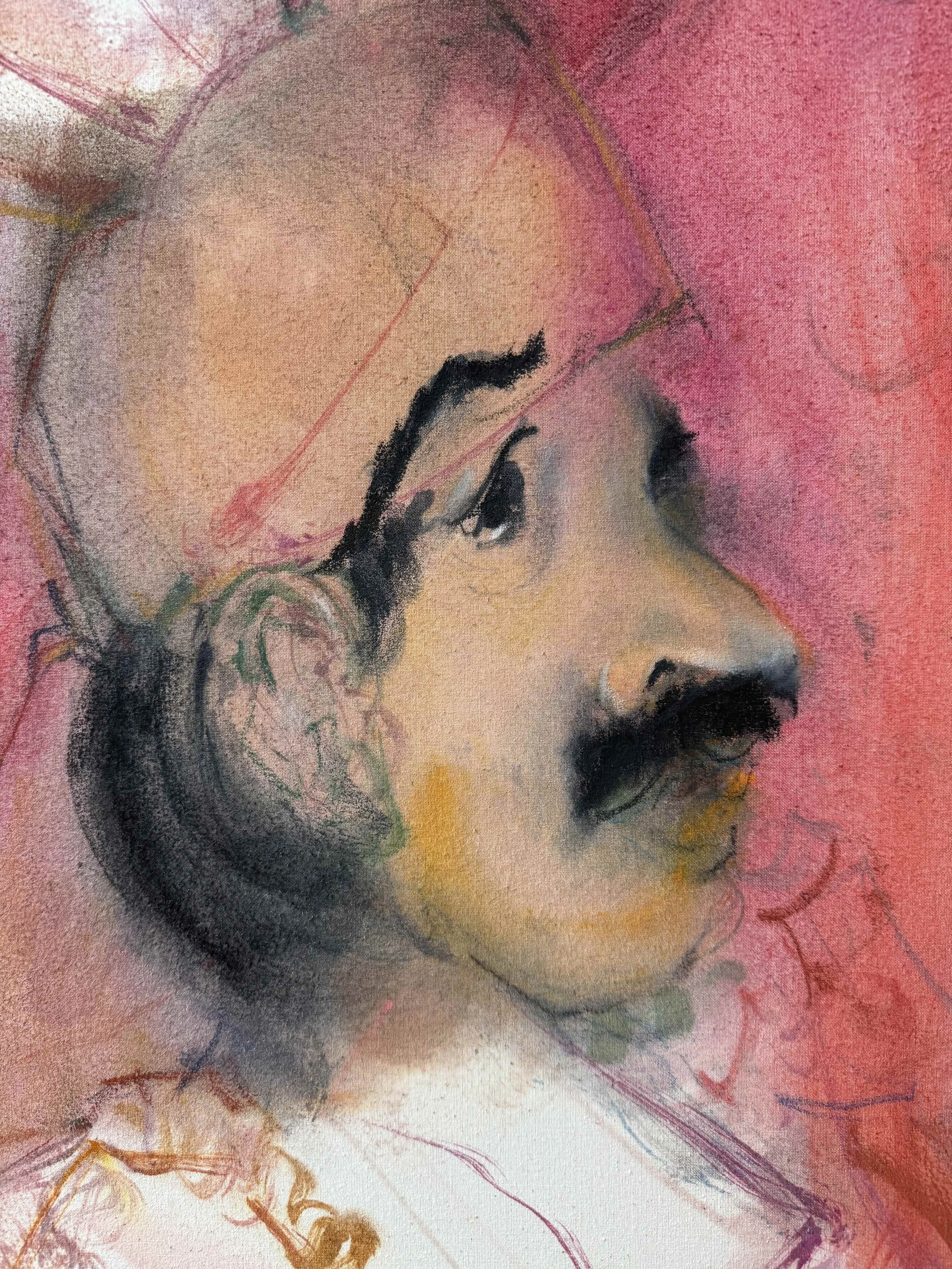
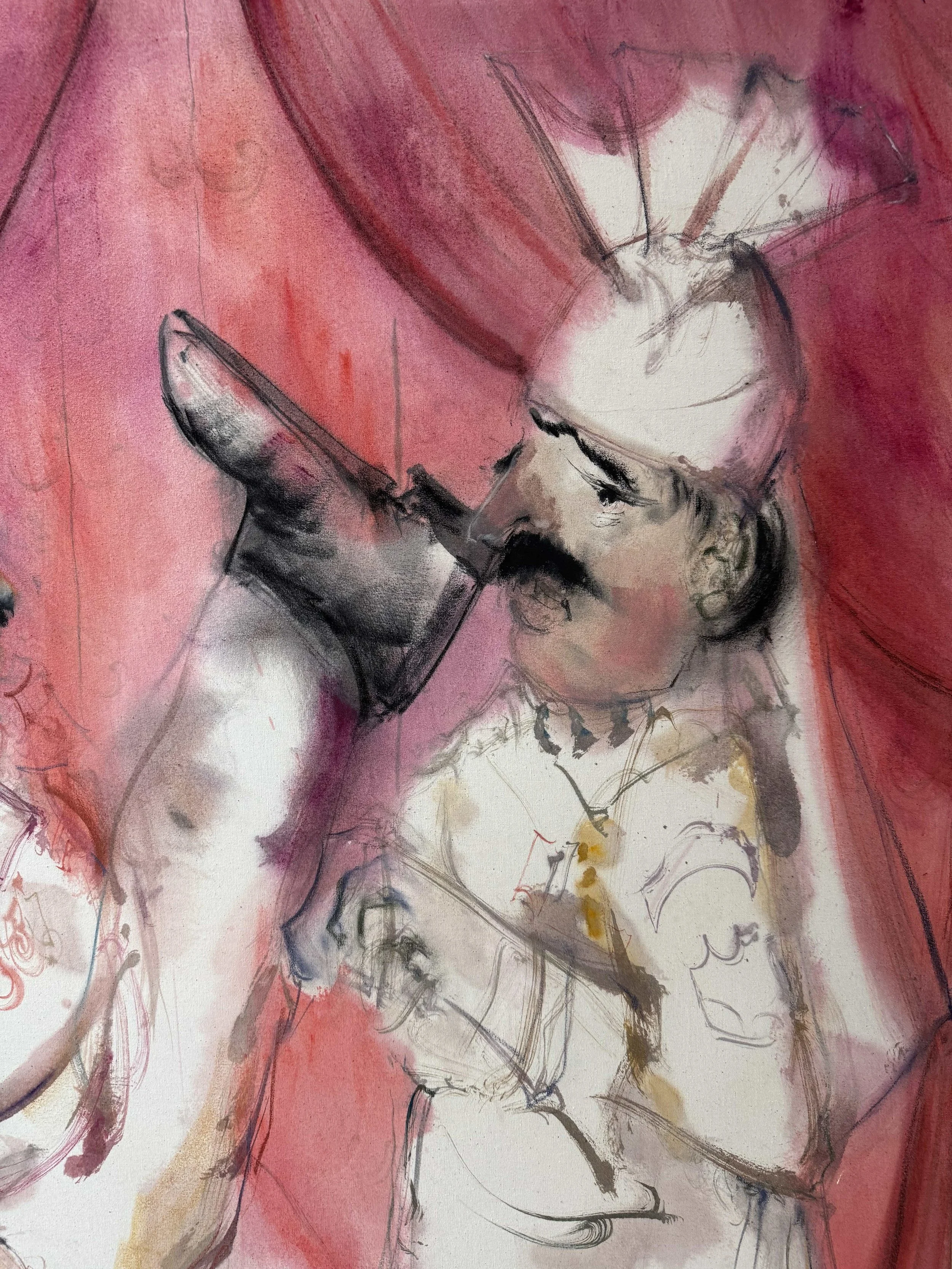
Who can do it better?, 2024, oil, acrylic, and charcoal on canvas, 72 x 92 in.

Upper Level, 2023, oil on panel, 10 x 8 in.
The nose that glows in the dark, 2024, oil on muslin, 9 x 9 in.